Industrial Equipment Installation: A Planning Guide for Live Facilities
Posted: November 2026
A new piece of equipment may be ready to leave the fabrication shop, but the plant receiving it has its own schedule, especially if it is a live facility. Employees need access to their work areas. Existing systems still serve production. A utility connection that looks straightforward on a drawing may require an outage the facility can only accommodate at a specific time.
Industrial equipment installation in an operating facility starts with understanding those constraints. Plant engineers, maintenance managers, and installation contractors need to determine what can keep running, what must stop, and how much work can be completed before the shutdown begins.
SWF Industrial has installed packaging systems, food and beverage processing equipment, tanks, silos, boilers, kiln burners, and other industrial systems. Across those projects, the challenges often come back to logistics, containment, and utility tie-ins.
Getting those details right takes coordination well before equipment arrives.
Plan the Installation Around Production

An operating plant places limits on where contractors can work, when equipment can move, and which systems can be interrupted. Those limits need to shape the installation schedule from the beginning.
Preconstruction meetings bring the end user and affiliated trades together to establish their requirements. A mechanical contractor may need access to an area that production still uses. Electrical or concrete work may need to finish before equipment can be set. A delivery date may determine when rigging equipment and field crews must be available.
Each dependency affects the others. A schedule needs to show how the work will proceed around them.
SWF begins scheduling discussions and site-visit planning shortly after a contract is finalized. A kickoff between the project manager and estimator brings the scope and project details forward before the team reviews field conditions.
The customer’s operating requirements then help determine the installation sequence.
Some work may proceed behind containment while production continues nearby. Other activities require an approved outage. Using a phased approach can also help maintain production schedules, by keeping specific lines or systems operational while others are taken out of service.
The essential question is how to limit the shutdown to the work that requires it and ensure that the window is sufficient to complete all of the work planned. Determining how much time that work needs starts with verifying the site conditions that could affect installation.
Verify Site Conditions Before Fabrication and Mobilization
Existing drawings provide a starting point. Field verification establishes what the installation team will actually encounter.
Equipment dimensions need to work in the final location, but they also need to work along the route into the building. Doorways, aisles, overhead restrictions, and access for rigging can determine how machinery moves into position.
Heavy equipment introduces engineering questions as well, as it requires space to operate properly and clearance to reach its destination. Floors and supporting structures along the travel path and at the installation location must also accommodate the load. The customer’s in-house engineer or a third-party engineer may need to evaluate those conditions. SWF uses the relevant engineering information to plan the move and confirm that the travel path and rigging equipment are suitable.
Responsibility for that evaluation should be established early so the installation team has the information it needs before finalizing the approach.
Retrofits may also benefit from laser scanning of existing conditions. SWF uses scanning when new fabricated equipment must fit an existing space. That information supports detailing and design while the project manager continues coordinating schedules and customer questions.
Field measurements are especially valuable before fabrication fixes dimensions that will be difficult to change later. They also give the shop and installation crews a common reference when reviewing fit-up requirements.
Prepare Materials and Assemblies Before the Outage
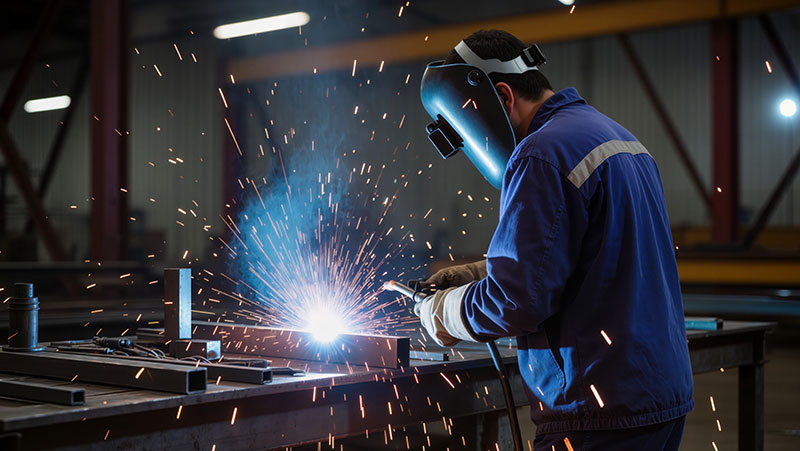
Prefabrication can reduce the amount of work that must happen inside an operating facility. It moves fabrication and some assembly into the shop, where the team can prepare components before the installation window opens.
Some projects call for fabricated members to be assembled before delivery or before paint is applied. That allows fit-up to be checked while corrections can still be made in the shop.
But a completed assembly does not necessarily mean the installation is ready.
Valves, gaskets, fasteners, consumables, finishes, and supporting materials all need to be accounted for. A missing component can hold up work even when the largest pieces have arrived.
Procurement and fabrication reviews should therefore follow the installation sequence. The team needs to know what is required for each stage and whether material delays affect the planned outage.
That readiness also depends on timely customer approvals. Drawings, equipment specifications, and material details may need to be submitted for review before purchasing or fabrication can proceed. The schedule should account for that review and any revisions so components are ready for the planned outage.
SWF’s project managers, shop teams, and field crews coordinate when conditions differ from what was understood during planning. Their task is to find a workable correction that causes the least disruption to the customer and the remaining schedule.
Give Utility Tie-Ins Their Own Plan
Utility tie-ins can require an outage window even when much of the surrounding installation can happen during normal operations.
SWF has encountered requests for proposals that did not fully identify tie-in requirements. Resolving those omissions during planning gives the customer and contractor time to establish the scope, responsibilities, and sequence.
The sequence depends on when the facility can interrupt the affected utility and what work can be completed beforehand. In some projects, an initial connection can be made during a short, planned outage, allowing the remaining installation to proceed while production resumes. In others, crews can install piping and related components in advance, leaving only the final connection for the approved shutdown window.
Both approaches depend on customer coordination and approval.
The plan also needs to identify who is responsible for equipment isolation, lockout, testing, and authorization to return the affected system to service. Those responsibilities should be agreed upon before the outage begins to prevent confusion or oversights from impacting the timing.
A machinery installation schedule should distinguish equipment delivery, setting, connection, and operational readiness. They may be separate milestones, with different people responsible for each.
Protect Production and Maintain Safe Access
Installation activity changes how employees, contractors, and materials move through a facility. Routes into and out of the work area need to be planned before mobilization, particularly while surrounding operations continue.
Product exposure is another concern. Barriers and containment may be needed to protect nearby equipment and production from installation activity. Sanitation requirements can affect how work areas are separated and what crews can bring into them.
Site preparation should also account for required protective equipment and facility-specific training. Finding out on arrival that a crew needs additional training or different equipment can delay the start of an already limited work window.
SWF’s safety program emphasizes planning and employee involvement. Unsafe activity can stop a job, so safety requirements need to be part of the execution plan from the beginning.
Regular communication keeps that plan connected to actual conditions. The project team should establish how field crews and subcontractors will coordinate daily and when environmental, health, and safety personnel need to be involved.
Bringing site preparation, utility work, and production schedules into one installation plan allows the team to sequence work around the facility’s operating needs. A cement plant project in Pennsylvania’s Lehigh Valley shows how SWF applied that approach, keeping one kiln operational while replacing the burners on another.
Phased Installation at a Lehigh Valley Cement Plant
A cement plant project in Pennsylvania’s Lehigh Valley illustrates how installation work can proceed while part of a facility remains operational.
SWF’s six-person crew worked on a four-month project installing new kiln burners, which each weighed 24,000 pounds. The installation required substantial layout work and structural steel to support the new assemblies.
SWF also fabricated and installed ducting for the centrifugal fan system serving each burner assembly. The team needed to coordinate that work with modifications to the natural gas system, incorporating both into the phased installation schedule.
- The plant kept one kiln running while the other was down for replacement work.
- The team completed the first installation, then started and tested it.
- A successful checkout allowed that kiln to return to operation before the second went down.
That sequence made the first installation’s readiness a condition for beginning the next phase. Structural work, equipment setting, ducting, utility work, and testing all had to support the same handover.
The project shows how phased installation can keep part of a facility running during a planned outage. Executing that plan also requires close coordination between fabrication and field crews, making the choice of who handles each scope an important planning decision.
Compare Fabricator-Installed Equipment with a Separate Installer
When choosing equipment installation services, plant teams may hire the fabricator to handle installation or use a separate installation contractor.
Keeping both scopes with one company can simplify coordination and accountability. A separate installer may make sense when the customer has an established contractor, needs specialized expertise, or must work around crew availability.
Either approach requires clear responsibilities and a coordinated schedule.
A separate installer needs enough information to understand the fabricated work, the intended fit, and the installation requirements. That handoff can require more detail than an internal transfer between teams familiar with the project and the fabricator’s standards.
SWF’s field services connect shop fabrication and installation through its project management, shop, and field teams. That connection can help the team resolve discrepancies, particularly when fabricated components must fit existing systems.
| Planning Factor | Fabricator Also Installs | Separate Installer |
|---|---|---|
| Handoffs | Shop and field teams share project knowledge through internal coordination. | Fabrication details, tolerances, and installation requirements need an explicit handoff. |
| Accountability | One company can coordinate corrections involving its fabrication and installation work. | The parties need agreed responsibilities for identifying, approving, and correcting issues. |
| Field Fit-Up | Installation crews can work directly with the team that fabricated the assembly. | The installer needs fabrication information and a defined route for resolving discrepancies. |
| Schedule Risk | Shared project management helps coordinate fabrication readiness and field availability. | Shop completion, delivery, and installation schedules require coordination across companies. |
Shared project knowledge can help, but it does not replace documentation. Both arrangements need clear drawings, responsibilities, and communication.
SWF’s turnkey field services case study illustrates coordination across fabrication, tank rigging, platforms, and piping. Its food manufacturing equipment installation case study shows how communication with outside engineers helped the team adapt when pandemic restrictions disrupted the original working arrangements.
Relocating existing equipment adds another layer of planning, regardless of who handles the installation. Before setting the schedule, the team needs to understand the machine’s current condition, any modifications, and what must change to make it work in the new location.
Allow More Investigation for Equipment Relocation
Equipment relocation often needs additional surveying and planning. Existing machinery may have been modified, and the available information may be less complete than drawings for newly fabricated equipment.
Moving it requires an understanding of the current installation and the proposed location. Connections and surrounding systems may need to change, and existing dimensions need to be verified.
SWF’s experience is that less control over the starting information requires more oversight. A production line rearrangement deserves a field review that accounts for what is already installed and what must be adapted.
Plant teams should allow time for that investigation before committing to the move date.
Before crews mobilize, plant teams should bring these planning decisions together in a final readiness review. The following pre-installation checklist can help the customer, installation contractor, and other trades confirm what is ready and resolve outstanding items before the work begins.
Pre-Installation Checklist for Plant Teams
Use this checklist to review readiness with the customer, installation contractor, and other trades before mobilization. [Click this link for a downloadable PDF of this checklist]
- Scope and responsibilities: Confirm installation boundaries, utility tie-ins, customer obligations, and subcontractor responsibilities.
- Site information: Complete field measurements or scanning and resolve access, clearance, floor-loading, and structural questions.
- Submittals and approvals: Verify that the customer has reviewed the proposed system and required approvals are complete.
- Materials: Check major components, hardware, valves, gaskets, finishes, and required material documentation.
- Schedule: Confirm deliveries, outage windows, subcontractor readiness, and field crew availability. Review the effect of any procurement delays.
- Installation equipment: Reserve the cranes, hoists, tools, and other equipment required during the outage.
- Facility provisions: Confirm available power, connection requirements, containment arrangements, protective equipment, and site training.
- Execution and communication: Establish coordination routines and identify work requiring additional safety involvement.
- Return to service: Agree on testing, acceptance requirements, and the people authorized to approve each stage.
- Closeout: Define cleanup, punch-list items, required reports, and updated or redlined drawings.
The installation plan needs to carry through to customer acceptance. Handling damage, unfinished touch-up work, missing test reports, and undocumented field changes can leave work unresolved after the equipment is in place.
A defined punch list and accurate as-built information help bring the installation through final acceptance. That work starts with a plan built around your facility’s operating requirements.
Planning an equipment installation in an operating facility? Talk with SWF Industrial about your scope, schedule, and field installation needs and let’s fabricate the future, together.