
Embracing AI in Manufacturing: Driving Efficiency and Scale
Posted: January 2026
Artificial intelligence is changing how manufacturers think, plan, and operate. For many industries, AI is still theoretical. For SWF Industrial, it’s a tool making work clearer, faster, and more efficient.
For SWF Industrial CEO Brandon Stanchock, AI is helping his teams focus on the work humans do best. In a field that faces an ongoing workforce shortage and rising complexity, the ability to turn thousands of data points into meaningful insights is essential.
SWF is known for innovative practices and a team-centered culture. Their approach to AI isn’t about replacing people, it’s focused on supporting them with tools that reduce friction, simplify decision-making, and create more value for customers.

The Importance of AI to Trades and Manufacturing
The manufacturing sector, particularly metal fabrication, is in a unique position.
Skilled tradespeople are retiring in droves, while the next generation doesn’t have the long apprenticeship periods that once existed. Brandon calls this ‘the tribal knowledge crisis’.
In the past, people joining the fabrication trade spent years working alongside an expert. They absorbed skills slowly and learned how to make decisions on the shop floor. Today, there is less time and fewer experienced tradespeople to pass down that knowledge in the same way.
AI helps bridge that gap.
Manufacturers are facing more complexity, more data, and tighter margins than ever before. Before work even starts, they have to navigate stacks of drawings, contracts, procedures, and schedules. They work through fluctuating materials costs and workforce shortages. With more work than workers, the amount of information attached to that work will continue to multiply.
Simply put, utilizing AI allows SWF to scale their company and upskill their team faster and more efficiently. By processing information that would overwhelm any individual, it gives teams more time to do the hands-on work that defines the trades.
Adoption, Automation, and Efficiency
For SWF, AI began as a simple tool for processing large data sets. Now, it’s a growing foundation for workflow optimization.
Automating Repetitive or Labor-Intensive Tasks
Manufacturing teams work with CSV files from CRM systems, ERP platforms, financial systems, safety records, insurance data, project folders, and vendor information. Reviewing even one of these files manually can take hours or days of critical time. Reviewing all of them is nearly impossible.
Brandon offered a clear example. When reviewing six years of insurance data to identify safety trends, he received a CSV file so large that it was unusable.
By running it through AI, he immediately received breakdowns of injury types, frequency, seasonality patterns, and cost impact. That analysis is essential for their strong safety culture, and it is only possible at scale with a tool that can evaluate thousands of data points in seconds.
SWF also uses AI to assist with:
- Contractual language
- Change order management
- Purchasing and vendor comparisons
- Bulk work for accounts payable and accounts receivable
- Processing global influences that affect materials pricing and lead times
Early Automation in Fabrication
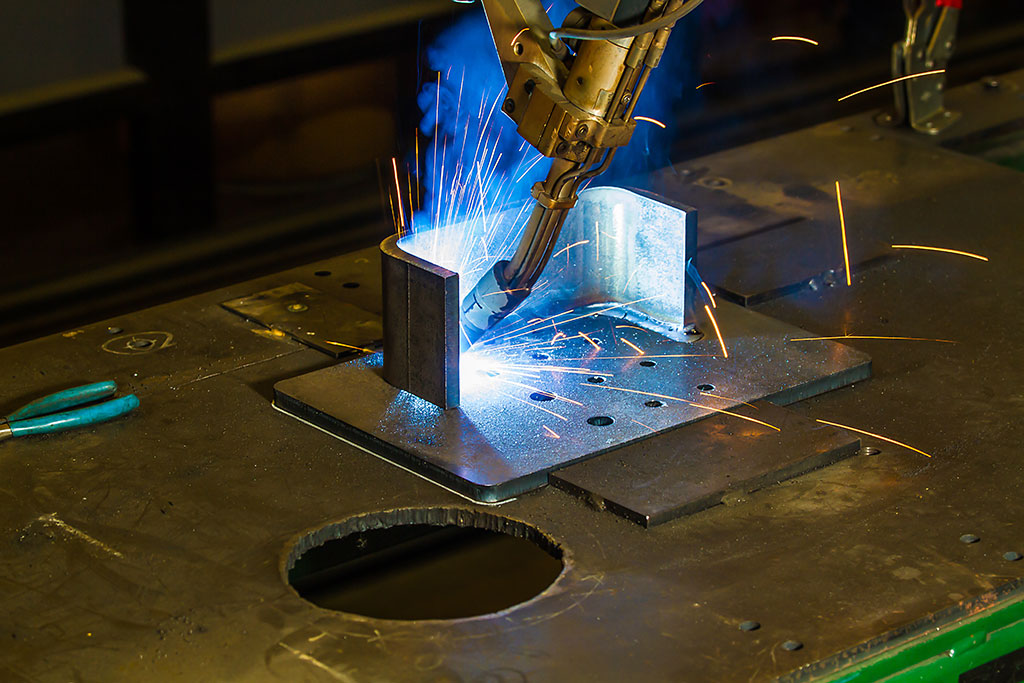
While fabrication itself remains a human craft, metal processing continues to trend toward automation. Laser cutting, bending, structural steel work, and certain repeatable processes can be automated with high accuracy.
That helps SWF turn complex custom builds into cleaner, standardized kits made for quick assembly by newer welders and fabricators, while teaching them skills that help their professional growth.
Automation and AI support the trades, but they don’t replace the workers. Instead, they create more reliable inputs so teams can focus on the quality of their work and their growth.
Data-Driven Decisions
Leadership teams frequently rely on summaries and trend analysis to make informed decisions. Before AI, that meant taking notes, pulling reports, reading long email threads, and interpreting large amounts of data or document sets.
AI now supplies leadership teams with:
- Summaries of long discussions and email chains
- Trends in project performance
- Insights from decades of historical data
- Clearer planning for complex scheduling
- Faster understanding of new contract language
- More accurate internal reporting
One of the most powerful examples of AI innovation is transcript summarization.
SWF records complex conversations in the field and during job assessments. AI turns those hours of audio into clear summaries and actionable reports. Now, a task that used to take half the day only takes thirty minutes. Those cumulative time savings across many small tasks result in drastic improvements in efficiency.
Supply Chain and Operations
Supply chain disruption is a common challenge amongst metal fabrication and manufacturing companies. Material fluctuations, geopolitical uncertainty, tariffs that impact industrial projects, and logistics challenges have tested nearly every industrial business in recent years.
AI supports SWF’s operations by:
- Highlighting purchasing patterns
- Identifying alternative vendors
- Providing inventory forecasting
- Surfacing risks in material availability
- Evaluating geopolitical events that may affect cost or lead times
While AI won’t replace the relationships that SWF has built with trusted vendors, it has strengthened those partnerships. When teams can see exactly what they buy, how often, and where bottlenecks may arise, they can make better purchasing decisions and manage materials more effectively.
Inventory management is one of the clearest future opportunities for industrial AI.
Brandon anticipates AI-driven tools that track materials in real time, reduce wasted hours searching for stock, and help plan purchasing cycles more precisely:
“We spend way too many hours looking for material right now. I don’t want a human doing that forever. With AI, once everything is tagged and tracked, you can just ask where it is.”
Roadblocks to Adoption
AI in manufacturing is powerful, but adoption has challenges.
The biggest obstacle is data cleanliness. If a file structure is disorganized, naming conventions are inconsistent, or if data lives in outdated formats, AI cannot interpret it correctly.
As Brandon explained, data cleanup is often the most frustrating part of adoption, but it is also the most important step. Without it, companies can’t rely on AI to search, summarize, or analyze their own archives. With it, they gain access and the capability to utilize decades of data.
Never Be Afraid: Tips on Overcoming Roadblocks
For leadership teams that feel overwhelmed, Brandon offers practical advice:
“Start small. Do not start with financial data or complex models. Ask AI to solve a simple problem. Use it to learn how your household oven works. Or use it to choose a gift. Build comfort before bringing it into operational workflows.”
For SWF, curiosity is the real skill. AI gives every team member the equivalent of a supportive, expert assistant who never judges, never gets tired, and never says no. When leaders and employees gain confidence in asking questions, AI becomes a partner for efficiency and growth.
Customer and Market Impact
Every improvement inside SWF ultimately benefits customers.
AI strengthens customer relationships and saves them money with:
- Improved planning accuracy
- Stronger transparency and scheduling
- Better internal communication, timeliness, and workforce support
Stronger internal processes lead to better results for clients. With more efficient project management and data-driven workflows, SWF can execute more work with the same number of people. That raises output potential without reducing quality.
Brandon also noted that long term, as efficiency strengthens across the organization, there may even be opportunities to reduce cost or increase value in ways that were previously impossible. As inflation and rising materials costs continue to affect all manufacturing sectors, efficiency can help outpace inflation.
AI-driven insights also help SWF benchmark against top-performing companies in the manufacturing industry. When planning incentives, for example, SWF used AI to gather best practices from leading manufacturers in the United States. This level of benchmarking supports transparency and aligns internal goals with industry excellence.
Looking Ahead
SWF continues to experiment, test, and refine its use of AI.
A major project underway is the Project Gauge, an internal tool that will allow employees to ask project specific questions and receive immediate answers. With a simple chat interface, the SWF team can access details such as hours charged, hours remaining, deadlines, drawings, contacts, and scope of work.
That clarity reduces delays by empowering the shop floor with real time information.
Quality, knowledge sharing, and workforce support will remain central areas of focus for AI expansion at SWF, make expertise accessible to everyone.
Future opportunities include:
- Greater transparency into company wide data
- AR assisted quality inspection using smart goggles
- Real time weld guidance for new apprentices
- Automated training videos and safety briefings
- Faster skill development across all departments
SWF Industrial: Forging the Future
AI is becoming a practical tool for improving manufacturing workflows by enhancing efficiency, clarifying information, and supporting teams at every level. In an industry facing workforce shortages and increasing complexity, these tools help bridge gaps, strengthen quality, and create more time for people to do the work they do best.
SWF is committed to innovation that helps customers save money, improves outcomes, and creates stronger project experiences. With AI as part of its operational toolkit, the company is preparing for a future built on transparency, accuracy, and smarter processes.
Ready to explore what a forward-thinking manufacturing partner can deliver?
Start a conversation with SWF today.