Process Piping for Data Center Cooling Systems and Retrofits
Posted: September 2026
Data centers generate enormous amounts of heat. When left unmanaged, heat can cause significant problems.
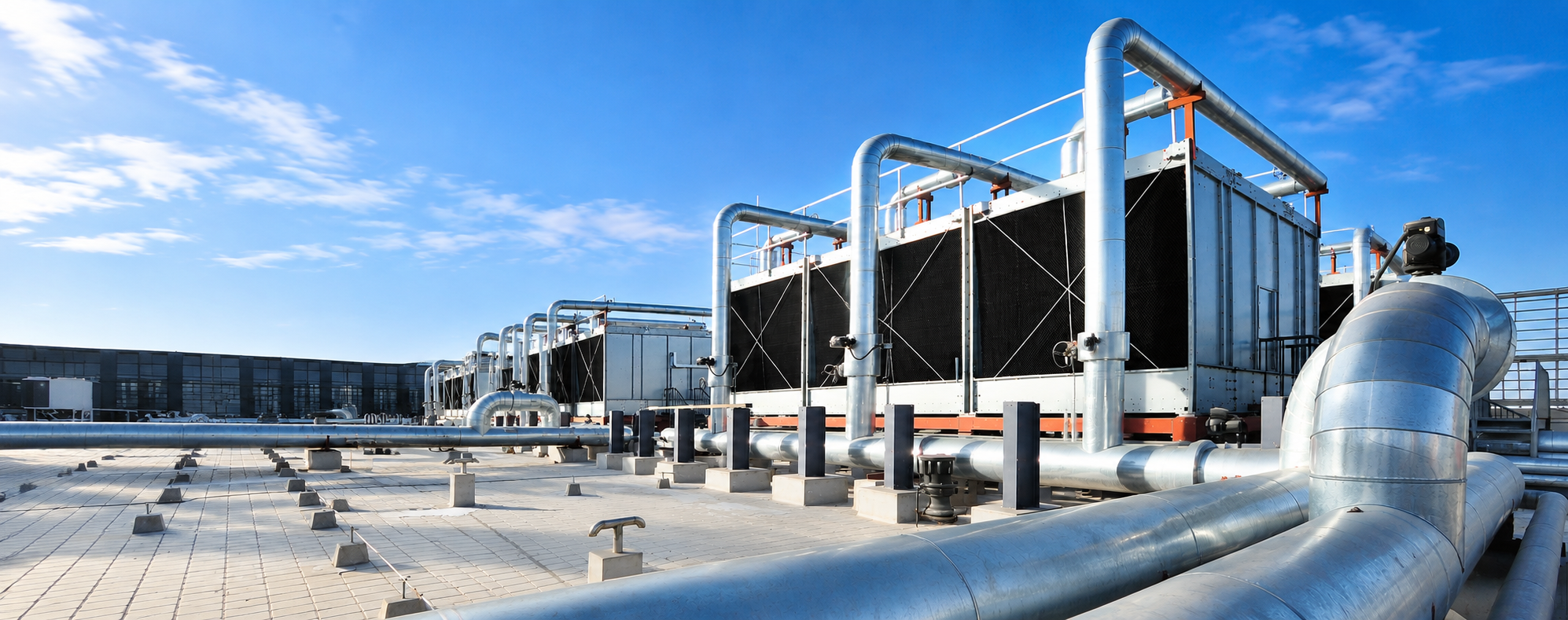
Behind the servers, racks, chillers, cooling towers, and other equipment is a network of piping that keeps cool water moving around the clock. When those systems are designed, fabricated, and installed correctly, they help protect equipment, maintain uptime, and support future expansion.
For owners, general contractors, mechanical contractors, and facility teams, selecting the right process piping contractor becomes even more important when the project involves an operating data center. New construction offers room to plan. Retrofit work often means fitting new piping into congested spaces while existing systems remain online.
How Process Piping Supports Data Center Cooling
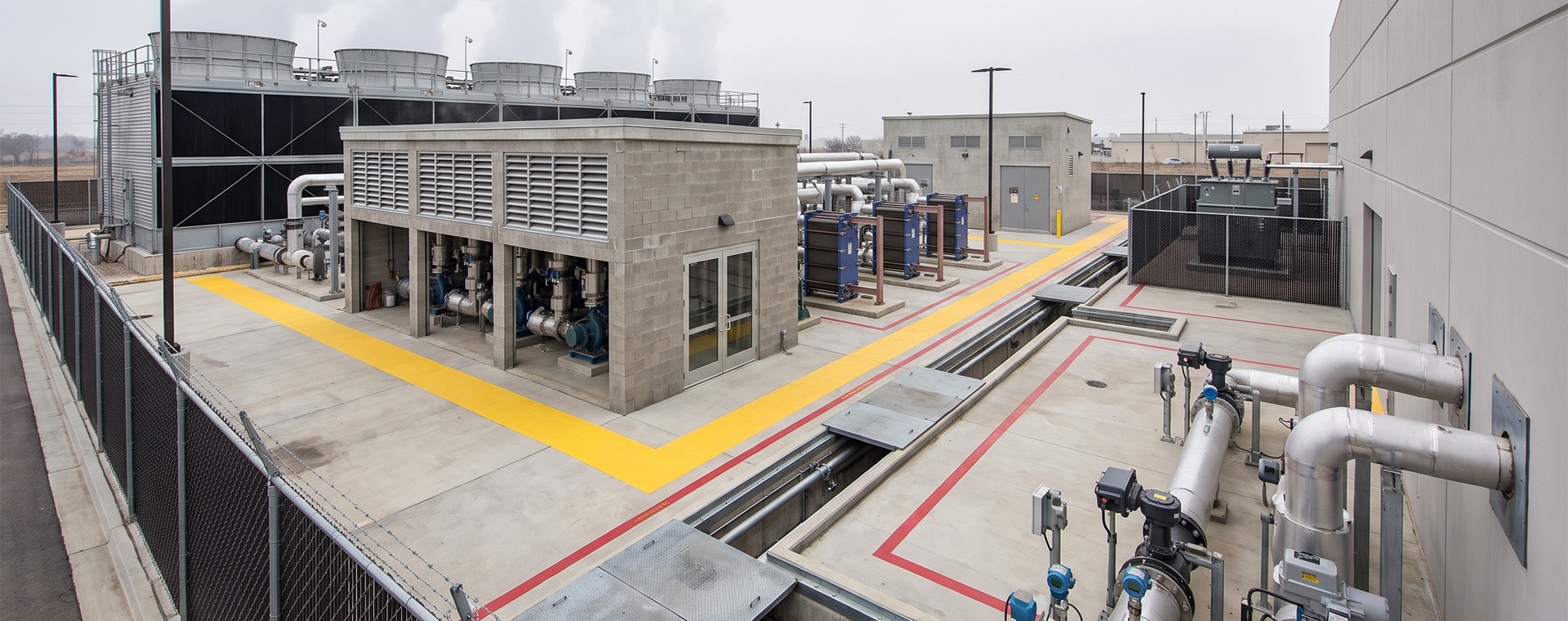
Two of the primary piping systems used in data center cooling are tower water and chilled water.
The tower water loop carries heat from the chiller to the cooling tower, where that heat is released to the outside atmosphere. Water circulates continuously between the chiller and cooling tower as part of that heat-rejection process.
The chilled water loop moves heat away from equipment inside the data center and back toward the chiller. Depending on the cooling design, chilled water may serve computer room air handlers, cooling distribution units, or other equipment that helps maintain operating temperatures within the data hall.
These systems have different jobs, but both depend on piping that can operate reliably under continuous demand.
Choosing Materials for Data Center Piping
Material selection varies by system, project requirements, water quality, and budget.
SWF commonly sees carbon steel used for tower water piping, while stainless steel may be selected for chilled-water applications where corrosion control and water cleanliness are higher priorities. Copper, PVC, and other materials may also be used depending on system requirements.
The choice matters because debris, corrosion, or contamination within a cooling loop can affect downstream equipment. In systems serving cooling distribution units or computer room air handlers, maintaining clean water and reliable flow is particularly important.
This is where experience with industrial pipe fabrication and material selection becomes valuable. The lowest-cost material is not automatically the right material for every part of the system.
The Role of Fabrication in Cooling Infrastructure
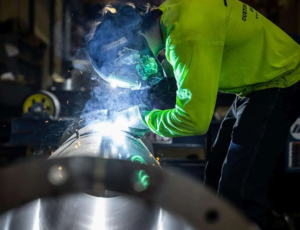
A large portion of data center piping can be fabricated before it reaches the jobsite.
SWF can use CAD files, drawings, and 3D models to fabricate pipe spools, headers, supports, and structural steel in a controlled shop environment. That moves welding, fitting, and assembly away from a crowded construction site and allows field crews to focus more heavily on installation.
For large new-build projects, prefabrication can occur while other site work continues. Finished components arrive ready for assembly rather than requiring crews to build every section in place.
The benefits extend beyond schedule.
Controlled process piping fabrication can improve consistency, reduce the amount of field hot work, decrease jobsite congestion, and limit the number of workers needed in sensitive areas. It also creates an opportunity to inspect components before shipment rather than discovering problems during installation.
For retrofit work, accurate field verification becomes even more important. Shop fabrication only saves time if the finished piping fits the actual conditions onsite.
Process Piping for New Data Center Construction
New data center construction gives project teams considerably more freedom.
Large chilled-water lines can be routed before ceilings, cable trays, electrical systems, and other infrastructure fill the available space. Large prefabricated assemblies may also be lifted into place while the building is still open enough to accommodate them.
This makes modular construction especially attractive.
Pipe spools and other assemblies can be fabricated in parallel with construction, then delivered in the sequence needed by field crews. Instead of performing extensive fabrication onsite, installers connect assemblies that have already been built and inspected.
And when schedules are aggressive, taking fabrication off the critical path can make a significant difference.
Retrofitting and Repiping Existing Data Centers
Retrofits change the equation.
An existing data center may already contain structural steel, cable trays, conduit, cooling systems, and other equipment occupying nearly every available pathway. New piping has to work around those conditions rather than through an open building.
Access can also dictate how something is fabricated.
A large spool that could be crane-set during new construction may not fit through a service elevator, hallway, or maintenance opening in an operating facility. That may require smaller fabricated sections and more carefully planned field connections.
Tie-ins present another challenge. New systems can usually be pressure-tested, flushed, and commissioned before the facility goes live. Existing systems may require carefully sequenced shutdowns, temporary bypasses, isolation strategies, or other project-specific methods to keep cooling available while work proceeds.
This is where data center retrofit experience matters most. The job is no longer simply to install new pipe. It is to install it without disrupting what is already operating.
Supporting Water-Efficient Cooling Upgrades
Retrofit projects can also create opportunities to reduce the water demands associated with data center cooling. Cooling towers use water continuously through evaporation and blowdown, while strategies such as water-side economization can reduce the load placed on the cooling plant. Research published in Resources, Conservation and Recycling found that combining air-side and water-side economization in chilled-water data centers reduced average Water Usage Effectiveness by approximately 22% across the U.S. locations modeled.
Process piping supports those upgrades by connecting new heat exchangers, economizer loops, cooling equipment, and revised water distribution systems to existing infrastructure. Accurate fabrication and installation help those systems maintain the intended flow paths, isolation points, and water quality while reducing the risk of leaks or contamination. The water savings come from the cooling strategy itself, but properly executed piping helps the upgraded system perform as designed.
The U.S. Department of Energy also identifies water-side economizers and improved cooling-tower management as opportunities to reduce data center water consumption. DOE guidance notes that increasing cooling-tower cycles of concentration from three to six can reduce makeup-water requirements by about 20% and blowdown by 50%.
For an existing data center, these improvements may require new piping, heat exchangers, bypasses, tie-ins, or modifications to tower-water and chilled-water loops. That makes careful planning and prefabrication especially valuable when the work has to be completed around operating equipment rather than in an open new-build environment.
Managing Active-Facility Constraints
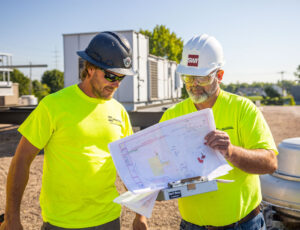
Data centers create unusual conditions for field crews.
Dust, metal shavings, water, and other construction debris have to be tightly controlled around sensitive electronics. Security requirements may also affect how workers, tools, and materials enter the space.
Temporary containment, filtration, detailed work sequencing, and off-site fabrication can all reduce exposure inside active areas.
Space is another issue. Piping may need to pass above equipment, below raised floors, or through areas already occupied by electrical and communications infrastructure.
Accurate measurements matter here. So does coordination.
A few inches can determine whether a prefabricated spool installs cleanly or creates hours of field rework.
Planning for Reliability, Redundancy, and Expansion
Data center cooling infrastructure is also built around what may happen later.
Piping layouts can incorporate alternate flow paths, isolation points, backup equipment, bypasses, and space around valves so individual components can be maintained without taking the entire system offline.
Future expansion deserves the same consideration.
Main headers may be sized or configured to support additional equipment, while capped connections or planned tie-in points can make later additions easier. Equipment placement and piping access should also account for the day when a pump, chiller, valve, or other component has to be removed and replaced.
Good data center cooling infrastructure does not simply work on opening day. It should remain serviceable as the facility changes.
Quality Control and Testing for Mission-Critical Piping
Cooling piping serving a data center has little room for preventable failures.
Inspection and testing requirements vary by project, but quality-control programs may include weld inspection, nondestructive examination, pressure testing, material verification, and flushing before commissioning.
Documentation can be just as important.
Weld maps, welder qualifications, material test reports, as-built information, and other records give owners a clearer picture of what was installed and how it was verified.
For a mission-critical facility, that documentation becomes part of the asset.
Choosing the Right Process Piping Contractor
A data center project needs more than a company that can weld pipe.
The right partner should understand how fabrication, field installation, access, scheduling, quality control, and coordination affect one another. That becomes even more important when work takes place inside an operating facility.
Shop capabilities matter. Field capabilities matter too.
A contractor that can combine pipe fabrication services with field installation and industrial construction support has more control over the transition from drawing to finished system. When site conditions change, the shop and field teams can respond as part of the same process rather than treating fabrication and installation as separate problems.
For new data center construction, that coordination can help keep an aggressive schedule moving. For retrofit and repiping projects, it can help reduce risk while working around infrastructure that cannot simply be shut down.
That is where an experienced process piping contractor earns its place on the project.